Are 3D-Printed Homes the Building Process of the Future?
The homebuilding industry is, and has always been, in a state of constant evolution. From architectural styles and construction techniques to the materials builders use and the layouts people want, changes in form and function simply come with the territory.
However, many traditional homebuilders could never have imagined that one day a robot would be capable of printing a house. To help explore this emerging technology, Maleno, a custom homebuilder since 1976, explains the process of 3-D printing a home, the pros and cons of this new approach, and what the future may hold for homebuyers.
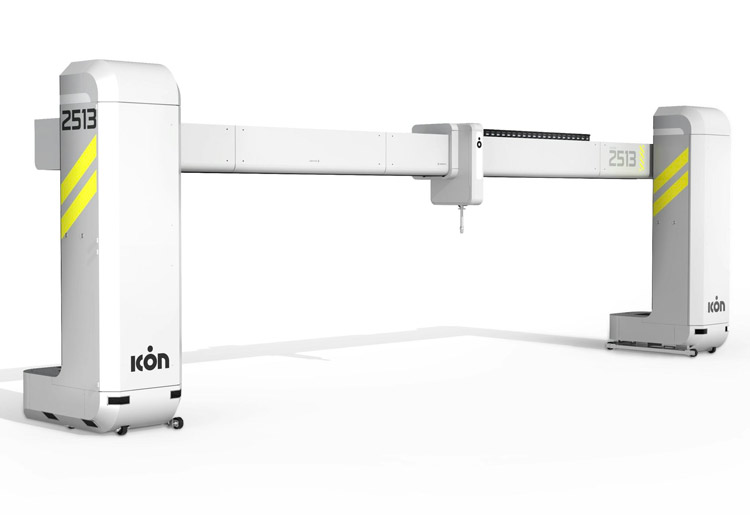 Image Credit: IconBuild.com
Building By The Layer
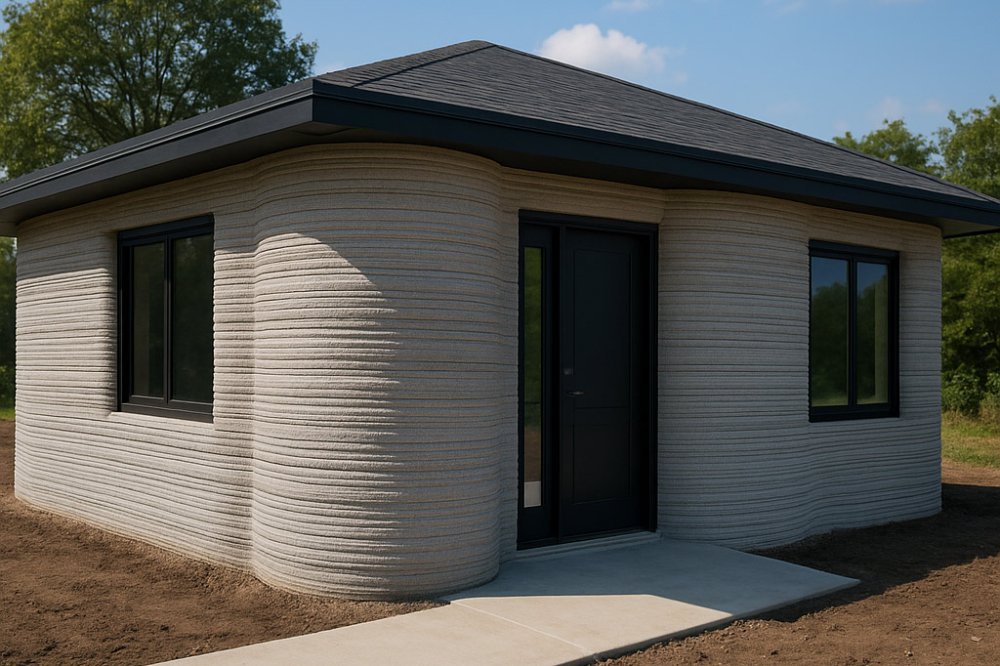
3-D printing is a form of additive manufacturing, where objects and structures are built in layers from a digital file. Accordingly, entire houses are being printed by specialized large-scale 3-D printers.
Arguably, the most eminent home-making machine on the market right now is called Vulcan, created by ICON. These printers are more than 45 feet wide and weigh about 4.75 tons. They use a proprietary cement-based printing material called Lavacrete to build the interior and exterior walls.
Operated by tablets and smartphones, Vulcan can print the core structure of a home in a mind-bending 24 hours, and complete the entire structure in as little as eight days. Recently, ICON built ‘Wolf Ranch,’ a 100-home neighborhood in Georgetown, Texas, which is the world’s first 3D-printed community. Beyond that neighborhood, however, ICON has more than 200 houses built in five states and two countries (and is currently in talks with NASA to print homes on the moon).
While construction experts say that 3-D printing is a significantly cheaper and faster way to build homes, the houses in Wolf Ranch are only slightly below the median home price in the area, falling between $325,000 and $560,000. That said, as the technology becomes more ubiquitous, there is real potential for positive social and economic impacts.
The Pros and Cons of 3-D Printed Homes
With companies like ICON, SQ4D, and Mighty Builders, the construction world is buzzing with the idea of 3D-printed homes. They boast faster builds, lower costs, and futuristic designs. But, is the promise real or simply a pipe dream?
Quick vs. Custom
Because 3D-printed houses utilize a gantry-based system, a fixed frame on which the printer head moves along rails, they are promising for mass production. Of course, the trade-off, then, becomes a lack of design freedom. Without customizations and charm, these structures can feel overwhelmingly cookie-cutter.
Building vs. Finishing
3-D printing companies boast wildly fast build times, but it can be misleading. Sure, the structure can be printed in days, but it’s far from move-in ready. This is because the printing process only constructs the interior and exterior walls of the house.
Contractors still need to come in to install plumbing and electricity, add roofing and insulation, frame in windows and doors, and complete interior and exterior finishing work. Additionally, the land preparation and environmental factors that need to be considered, as well as the controls to ensure a successful print, are extensive.
Environmentally-Friendly vs. Environmentally-Certainty
There are some promising studies on the environmental friendliness of 3-D printed houses, especially those using geopolymer concrete and sawdust. In the best-case scenarios for 3D printing, emissions were reduced by up to 48% compared to traditional concrete structures.
That said, there are some serious caveats. Some 3D printing mixes require sodium silicate, which has a high environmental cost associated with its production. Moreover, traditional building methods use well-established materials and labor networks, reducing transport emissions.
Wood-frame construction, in particular, can be more environmentally friendly than 3-D printing concrete when timber is sustainably harvested, and construction waste is minimized through good home design planning.
Perhaps most importantly, the long-term sustainability of 3D-printed homes remains unknown, whereas traditional materials such as wood, brick, and stone have proven to have clear longevity.
New Risk vs. Old Risks
There is a certain level of risk that comes with any sector of the construction industry. And, with new 3-D printing technology comes unfamiliar dangers and hazards.
Without proper protection and training on 3D printing, builders could be at an increased risk of exposure to:
- Metal powders, fires and explosions, and high-power lasers
- Ultrafine particulates and volatile organic compounds (VOCs), including styrene, toluene, methyl methacrylate, and aldehydes
- Environmental job site contaminants
- Pinch points and struck-by hazards
Manual Labor vs. Skilled Labor
There is a high likelihood that 3D-printed homes will reshape the construction industry. However, rather than eliminating jobs, there is an opportunity to shift skillsets, roles, and workflows.
Manual labor roles will likely evolve into large-format 3-D technicians, much in the same way construction crews now have a heavy equipment operator on a job site. Those who can operate, maintain, and troubleshoot 3D printers in the field will be highly sought after.
Likewise, homebuilding crews will need to learn digital fabrication tools and understand the behavior of concrete or geopolymer “inks.” Because these inks only build the structure of a house, the industry will see an increased need for plumbers, electricians, and finish carpenters who are familiar with working in the context of these new building materials.
The Future We See
At Maleno, we are optimistic about the future of housing. Technology can certainly bring about significant shifts in the industry, but with it come opportunities to build smarter, more sustainably. Furthermore, there will always be a market for those who prefer the style and charm of traditional homes, as well as others seeking more affordable, modern options.
As one of the leading custom building companies in Erie, PA, we’re dedicated to exceptional craftsmanship, quality materials, and a customized building process that our customers love.
We’re also fascinated by what the future holds. We’ve been a major proponent of smart home technology to improve eco-friendliness, safety, and quality of life for homeowners, and will continue to stay at the forefront of what’s possible in the industry. If you’d like to learn more about our custom building services, please reach out today.